
New mortality assumptions finalized for pension commuted values effective April 1, 2027
Special Notice – October 2026
In brief:
- The Actuarial Standards Board (ASB) of the Canadian Institute of Actuaries (CIA) has finalized a new mortality basis for pension commuted value (CV) calculations, effective April 1, 2027.
- The new basis will use the pension amount-weighted CPM2024 Combined mortality table, together with the MI-CAN-2024 mortality improvement scale, in place of the current CPM2014 Combined mortality table projected using the CPM-B improvement scale.
- The change will generally increase commuted values, all else being equal. Illustrative increases are generally in the range of 2% to 6%, although the impact will vary materially by age, pension form, indexation and other member and plan characteristics.
- Plan sponsors and administrators should begin preparing system changes, testing calculation results and updating member communications ahead of the effective date.
Commuted value calculations
Section 3500 of the CIA Standards of Practice (The CV Standards) sets out how to calculate the lump-sum value of pension benefits. CVs are used in individual member calculations, where members have an option to a lump-sum transfer of their pension entitlement. The CV Standards outline the methodology and assumptions basis which must be used in the determination of CVs, which will now be updated effective April 1, 2027.
Key developments and dates
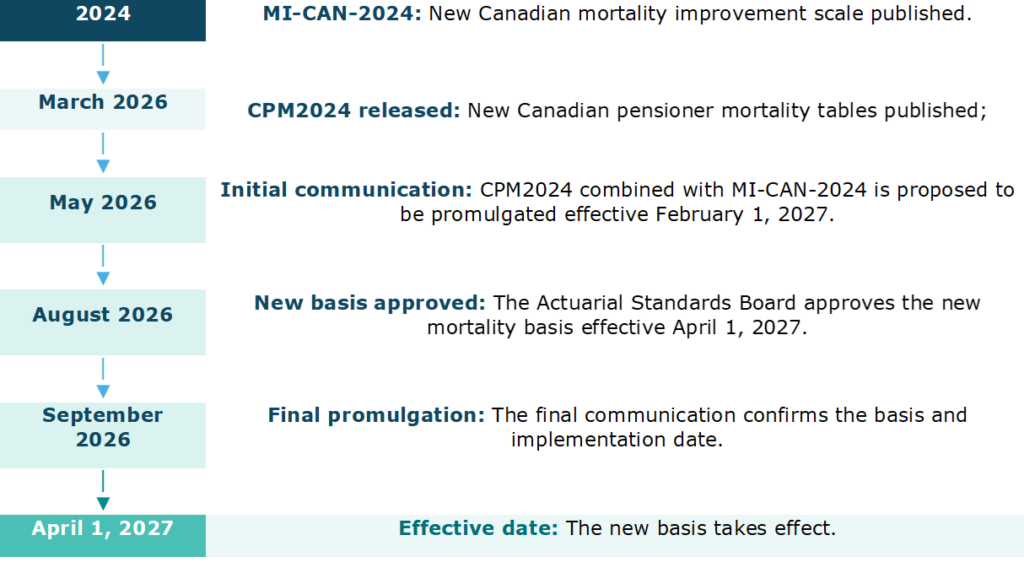
The final promulgation specifies:
- Base mortality: the CPM2024 Combined mortality table, which reflects pension amount-weighted rates, with separate male and female rates and no separate mortality table for surviving spouses; and
- Mortality improvements: the MI-CAN-2024 improvement scale.
The final communication permits earlier implementation in appropriate circumstances. Before implementing the new basis early, administrators should confirm the applicable legal, regulatory, administrative and plan-specific requirements.
| What is not changing | Upcoming developments |
|
|
What the change means
The new mortality basis reflects longer life expectancies than the current prescribed basis. As a result, commuted values will generally increase, all else being equal.
For plans, the effect on cash flows, plan liabilities, funded position and contribution requirements will vary depending on the plan’s provisions, valuation basis, demographics, and the number of members who elect lump-sum settlements.
Operationally, the change will require coordinated updates across administration systems, calculation specifications, quality-control processes, member-facing materials and actuarial models. Although the new basis does not take effect until April 1, 2027, affected systems, specifications and communications should be updated and tested in advance.
How large could the impact be?
The new basis will generally increase commuted values, all else being equal, but the magnitude will vary significantly by membership group and plan provisions.
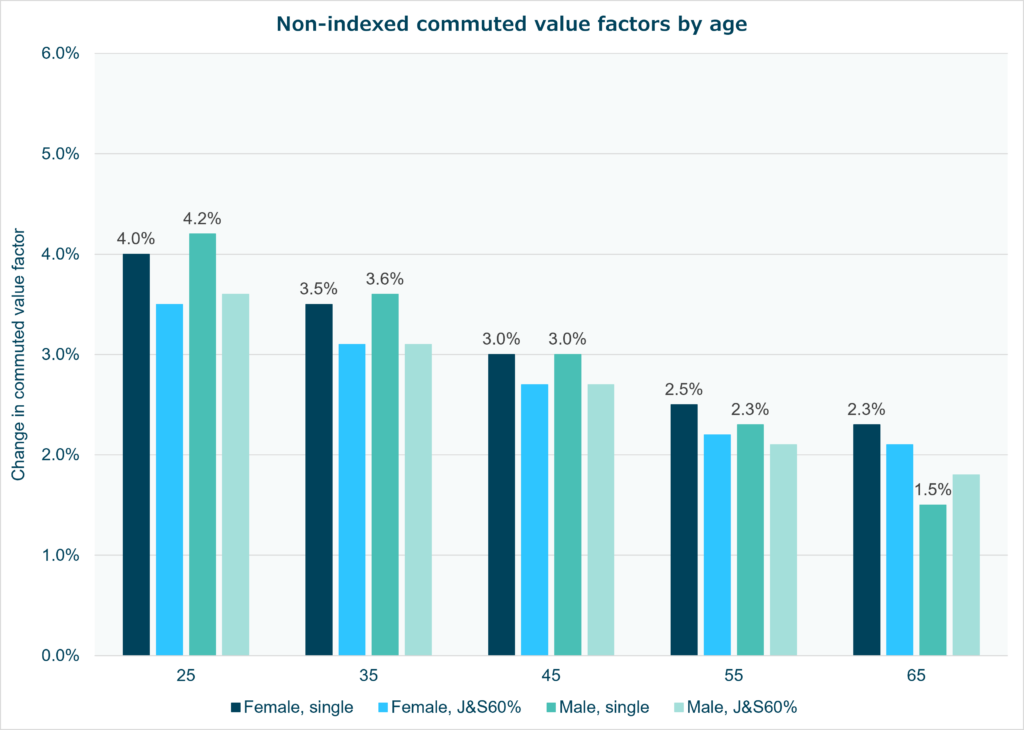
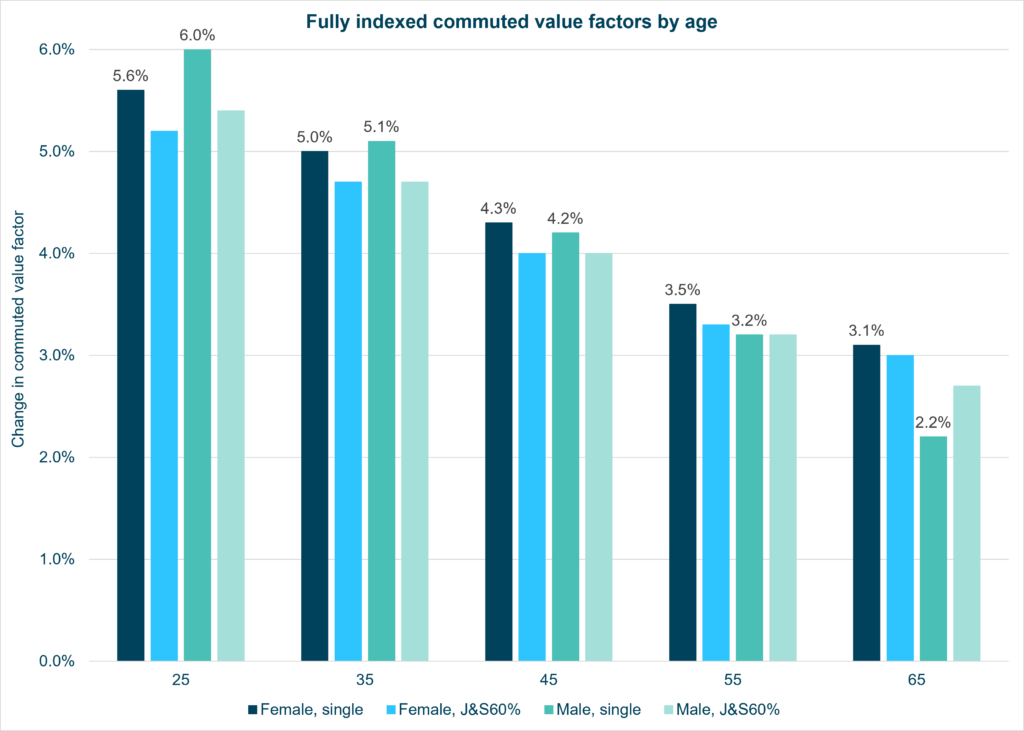
Source: Canadian Institute of Actuaries Initial Communication of a Promulgation of the Mortality Table Referenced in the Standards of Practice for Pension Plans (Subsection 3530) dated May 6, 2026.
In the illustrations, increases were generally greater:
- at younger ages;
- for indexed pensions; and
- for female groups.
These results illustrate the effect on individual commuted values and should not be applied directly to a plan’s total liabilities. Plan-level impacts will depend on the benefits affected, valuation basis, expected termination experience, member elections and plan demographics.
The change applies directly to benefits settled through commuted value payments. It does not change the monthly pensions paid to members who receive their benefits from the plan.
The new basis may affect a plan’s funded position immediately, where it results in changes to valuation assumptions, or over time through changes in actual lump-sum payments and member elections.The new mortality basis will produce a noticeable one-time increase in commuted values, all else being equal. Ongoing movements in commuted value interest rates will continue to cause values to fluctuate from month to month.
Implications for plan sponsors and administrators
The new basis may affect more than individual member calculations. It may also affect actuarial liabilities and projections where benefits are expected to be settled through lump-sum payments.
Before April 1, 2027, plan sponsors and administrators should:
- Confirm that internal and third-party systems can apply the CPM2024 Combined table and
MI-CAN-2024 improvement scale; - Agree on the implementation date and treatment of calculations with relevant dates before, on or after the transition date;
- Update calculation specifications, administrative procedures and quality-control processes;
- Complete parallel calculations and testing across representative member cases, including less common benefit forms and other exception cases;
- Update member statements, option packages, forms and explanatory materials;
- Assess potential effects on projected benefit payments, solvency or wind-up liabilities and contribution requirements, where applicable; and
- Review termination and commuted value assumptions with the plan actuary, including whether the change could affect member elections.
How Eckler can help
Organizations should begin planning now to support a controlled transition by April 1, 2027. Eckler can assist with impact analysis, system testing, assumption reviews and member communications. Please contact your Eckler consultant to discuss the implications for your plan.
This issue of Special notice has been prepared for general information purposes only and does not constitute professional advice. Should you require professional advice based on the contents of this notice, please contact an Eckler consultant.