
Balancing today’s costs with long-term retirement savings
Capital Accumulation Plan Income Tracker (CAPit) – July 2026
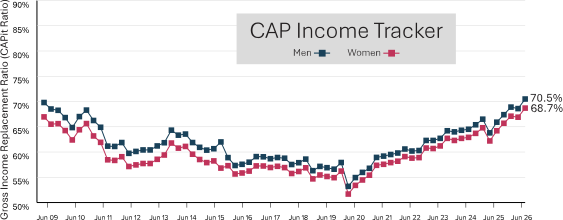
Markets strengthened in the second quarter of 2026 as easing geopolitical concerns, declining oil prices, and renewed momentum in AI‑related sectors supported a broad recovery in global equity markets. Against this backdrop, Capital Accumulation Plan (CAP) member outcomes have been favourable. A male member retiring at end of June 2026 achieved a gross income replacement ratio of 70.5%, up from 68.6% in March 2026. A female member achieved 68.7%, up from 66.9%, representing the best outcomes over the past 17 years.
While retirement outcomes are strengthening, many members are facing increasing pressure on day‑to‑day finances. Rising interest rates, higher borrowing costs, and ongoing affordability challenges are making it more difficult to balance immediate financial needs with longer‑term goals like retirement saving. This is beginning to show in member behaviour, with some plans already seeing lower contribution levels in early 2026.
Many members are also carrying higher‑interest debt, creating a natural tension between paying down their liabilities and continuing to save. When financial pressures increase, retirement savings are often one of the first areas to be reduced or paused. From a financial perspective, prioritizing the repayment of high‑interest debt is often appropriate. However, doing so at the expense of workplace plan participation, particularly when an employer match is available, can result in missed opportunities to build long‑term retirement income.
One approach is to strike a balance between the two priorities. Maintaining at least a minimum level of retirement contributions, and capturing the full employer match where financially feasible, while directing additional cash flow toward debt repayment or other key financial priorities, allows members to make progress on both fronts. This helps preserve the long‑term benefits of compounding and employer contributions, even during periods of financial constraint.
The impact of reduced contributions can be significant over time. Lower savings rates today not only reduce account balances but also limit the compounding effect that drives retirement growth. This can translate into lower projected income replacement ratios, particularly if contribution reductions persist for an extended period. While short‑term adjustments may be necessary, sustained reductions in savings can meaningfully affect retirement readiness.
These challenges highlight the importance of framing retirement saving within the broader context of financial wellness. Supporting members with practical guidance on budgeting debt and savings management can help them make more informed decisions during periods of financial stress. Clear communication around the value of employer matching programs, as well as tools that illustrate the long‑term impact of contribution changes, can also support continued education and engagement.
Balancing immediate financial pressures with future retirement needs is not straightforward, and there is no single solution that applies to all members. However, at a minimum, maintaining some level of ongoing participation in workplace savings plans, even at reduced levels, can help preserve long‑term outcomes while members navigate current financial realities.
About the CAP Income Tracker
The CAP Income Tracker assumes the member made annual contributions at a rate of 10% starting at age 40, will receive maximum Old Age Security and Canada/ Quebec Pension Plan payments, and will use their CAP account balance at retirement to buy an annuity. The member’s CAP account is invested based on a balanced strategy. Salary has been adjusted annually in line with changes in the average industrial wage and is set at $78,954 as of June 30, 2026.
This issue of CAPit has been prepared for general information purposes only and does not constitute professional advice. Should you require professional advice based on the contents of this publication, please contact an Eckler consultant.