
Eckler’s survey shows a national average base salary increase of 3.3% for 2027, suggesting steady growth amid economic uncertainty.
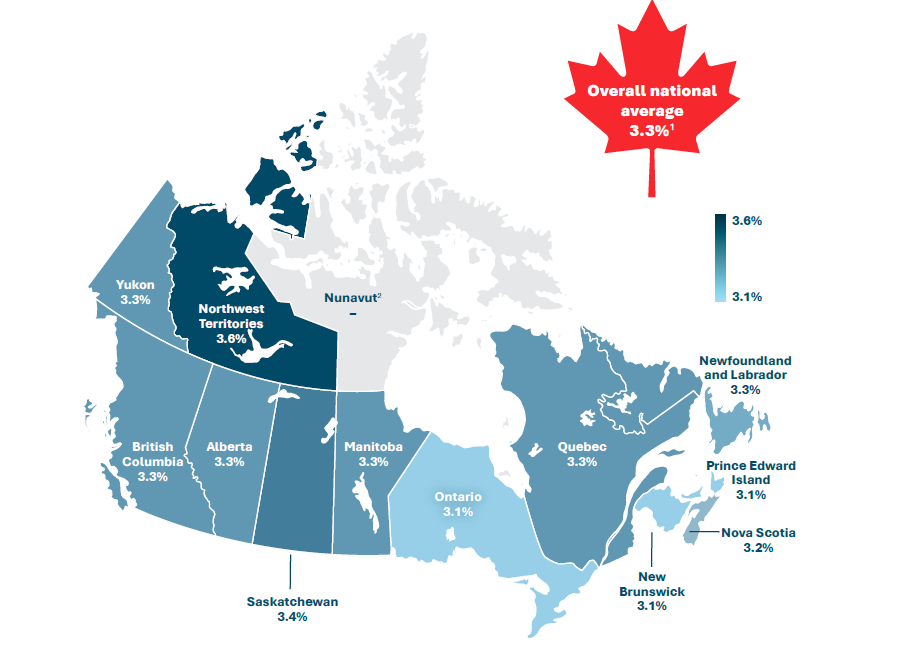 Canadian organizations are planning an average base salary increase of 3.3% for 2027 (excluding planned salary freezes), according to Eckler’s latest compensation eplanning survey. This is slightly above the 3.2% delivered in 2026, which suggests steady salary growth as employers balance talent priorities amid economic uncertainty.
Regional highlights:
The Northwest Territories and Western Canada lead in wage growth, while the Atlantic provinces and Ontario lag behind.
- Highest increases: Northwest Territories has the highest projected base salary increase (3.6%), followed by Saskatchewan (3.4%).
- Moderate increases: Alberta, British Columbia, Manitoba, Newfoundland & Labrador, Quebec, and Yukon match the national average (3.3%), Nova Scotia follows at 3.2%.
- Lowest increases: New Brunswick, Ontario and Prince Edward Island have the lowest projected increases (3.1%).
Highlights by industry:
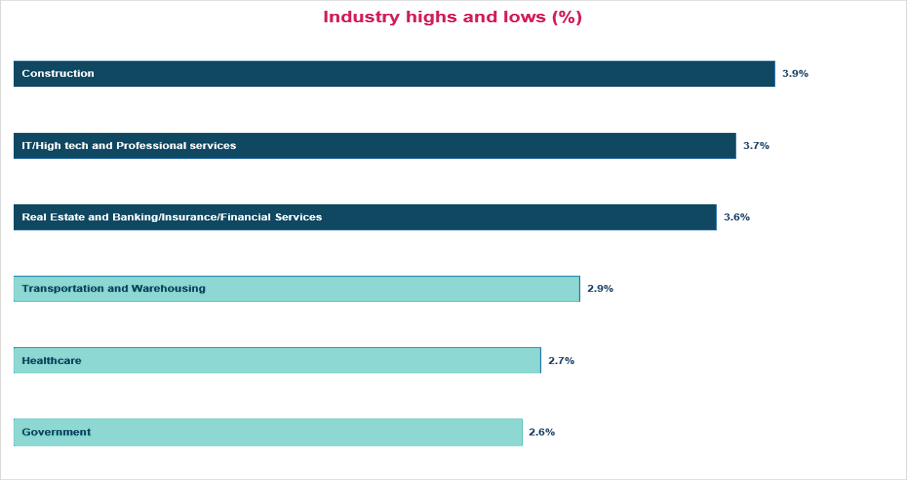
Projected base salary increases by industry range from 2.6% to 3.9%.
Top sectors: Construction (3.9%), IT/high tech and professional services (3.7%), and real estate and banking/insurance/financial services (3.6%)
Lowest sectors: Transportation and warehousing (2.9%), healthcare (2.7%), and government (2.6%)
Foundational compensation practices and strategic enhancements are a priority for 2027
Canadian organizations are balancing foundational compensation practices with strategic enhancements.
Key priorities include:
- Participating in salary benchmark surveys (60.8%)
- Maintaining up-to-date job descriptions (41.0%)
- Improving and/or reviewing existing incentive plans (31.3%)
- Conducting pay equity analysis (27.6%)
- Implementing an improved compensation system or HRIS (27.2%)
Pay transparency and HR technology are gaining attention. Organizations are exploring AI while taking a more employee-focused approach to rewards, with flexible work, health and wellness benefits, and other offerings that support attraction and retention.
About the Survey
Eckler’s Compensation eplanning survey was conducted from July to August 2026, with responses from over 300 Canadian organizations across diverse sectors. It provides critical insights into salary trends, pay practices, and HR priorities.